Sunday, November 25, 2007

What's in a Name?

With apologies to the Bard of Avon (whoever he or she may have been), one of the recurring questions on forums and in casual model railroad conversations is what to call a freelanced model railroad. Although I personally find them trite and unconvincing, there still seems to be quite a following for the cutesy-poo names such as "Bumpkin and Booville Lines". Another group goes for dynamic sounding names like "Sidewinder Railway". And yet another subset chooses a name to yield a clever (or naughty) acronym (toilet humor seems, unfortunately, to be particularly favored here).

But most real railroads' existence depended on investors and customers viewing them as reliable transportation organizations. Although real railroad names were sometimes ambitious, even aspirational, they tended to communicate a business-like sense of purpose. Even if they never reached the end points their names suggested (e.g., "Kansas City, Mexico, and Orient"), these names provided a promise to which investors and the general public could relate.

I talked about synchronicity in my last post about model railroad layout analysis in terms of the track design and operations. And naming can certainly play a role as well for freelanced designs. A realistic name communicates purpose and can help anchor the layout in a place and time. But what makes a name realistic?

Bob Warren undertook a survey of 100 real-life railroad names from the classic era in the Layout Design News LDN-13, April 1995, published by the Layout Design SIG. Bob found that the majority (nearly 70%) had a geographical term in the name (Pacific, Atlantic, Central, Western, Eastern, etc.). 56% had a city name in the title, 29% a state name (of course, there were many combinations like New York Central).

More modern times have seen names that lean toward the anonymous acronym ("CSX", anyone?), yet even these tend to have geographical meanings and roots, even if only from the names of the merged fallen flags.

So when comparing freelanced names, "Utah Colorado Western" (Lee Nicholas' fine layout) just seems more compelling to me than "Higgleytown and Busterville". One feels like a real business to me, the other like something from a storybook. On the other hand, a freelanced layout depicting a struggling backwoods logger might well have a more modest name, suggesting its lesser aspirations. Maybe not something silly, but more "Sierra Lumber", as opposed to "California, Oregon, and Idaho".

When chosen carefully (mindful of the generalities of real-life names), a freelanced railroad name can communicate much about the imagineered prototype and its locale, era, and purpose. To me, that gives a freelanced line a head start in the viewer's mind and allows the track plan, scenery, and modeled industries to be viewed in context. Choosing the name of a freelanced railroad is fun, but it's also an easy place to go wrong.


Most of time I mention music in the blog, it's commenting about an entire album that I really enjoy, not just a song or two. Under the Covers, Volume 1, by Matthew Sweet and Susanna Hoffs (everyone's favorite Bangle) is not a breakthrough concept -- it's a collection of mostly-familiar late '60s covers. I actually bought the CD for my wife and didn't expect to be too excited about it. But the interpretation and execution of a few of the songs is just terrific. Their cover of Lionel-fan Neil Young's "Cinnamon Girl" is one of the coolest pieces of power-pop you'll ever hear. (Sweet's standout guitar work on this number is hardly an imitation of Young, much more of a retro revival.) A number of the other songs on the album just aren't my cup of tea, but the presence of a few standouts was a really pleasant surprise.

Sunday, November 11, 2007

Track Plan Analysis, Part 5

I'll close this series on model railroad track plan analysis with some thoughts on three topics that are much harder to define objectively. If a plan has made it this far, there are few (or only easily correctable) mechanical flaws and we're ready to get down to very serious subjective analysis.

10) Layout Vision

As I noted earlier, this is usually where I start when I ask prospective clients about their layout ideas, yet it comes late in the process here. Vision in a model railroad context is a little difficult to define. Some brief vision descriptions from layouts and plans I know well might include: "mainline Santa Fe in the Texas Panhandle", "a sampler of classic western railroad scenes", "shortline railroading in the Olympic Peninsula", "the Santa Fe in California in 1973", "terminal rail-marine operations in the '50s", "upstate New York in the depression", "making connections with convoys in WWII", "plausible setting for eclectic model collection", and many more.

Vision can include an idea of era, locale, economic health, and viewer and operator perspectives or job roles. Is the passage of flashy streamliners what you picture from looking at the track plan? Or decrepit backwoods make-do logging gear struggling up stiff grades? Far too many plans include a pinch of this and a soupçon of that, blending (blanding?) together into generalities without personality. Vision is challenging to define and even more challenging to reflect in a track plan -- but when it works, the effect on realism and engagement is amazing.

Extracting this vision from only a track plan is a matter of looking at track configurations, industries, likely scenery elements, etc. Long sinuous passing sidings and wyes for turning helpers suggest a mountain-climbing railroad. Tightly packed and complex trackwork reflects the expensive urban waterfront property on which it is built. Long tangents and "prairie skyscrapers" help set the scene for a granger line.

And within these broader schemes and definitions, there will be emphasis on certain elements. For example, a 4-track Pennsy mainline may serve primarily as establishing scenery for gritty parallel industrial trackage where lowly shifters dodge real or simulated mainline Clockers. The vision here is of the local work, not the glamorous varnish, yet the infrastructure of the well maintained mainlines helps accentuate and define the layout's industrial-switching focus by contrast.

The old model railroad track plan books often concluded the description of a particular layout with a line like " … or replace the grain elevator with a mine and sprinkle on some pines and your granger railroad can be a mining line in the old west!" Ummm … no. If you look at a plan and it would be easy to change its place, time and purpose merely by applying products from Woodland Scenics, that plan may not be reflecting a unique vision very well.

11) Story Telling

This flows naturally from Layout Vision and some may not find it especially useful to make a distinction. But to me, story telling comes from small vignettes, trackwork elements, or operating practices that help communicate the vision. A derelict interlocking tower and pulled-up crossing tracks communicate something specific about place, time, and purpose. A covered turntable or long train sheds with a siding for a fire train speak volumes about fighting grades (and the occasional wayward spark) in the high country. Milk platforms. LCL freight houses. Flood loaders. These kinds of layout elements express another bit of information about the layout vision.

Story telling, of course, is easier in terms of operation, by assigning job roles or even attitudes as does Jim Senese on his Kansas City Terminal Railroad. But I think well-designed vignettes and track configurations can also play a vital role. Layouts that tell stories well just "feel right", drawing the viewer and operator into the vision of the owner and/or designer.

12) Synchronicity

Simply stated, do all the layout elements coordinate and support the vision of the layout and the goals of the owner? For example, if the vision is recreating Timetable and Train Order operations, are there sufficient staging tracks, adequately and well-placed passing sidings, space set aside for dispatchers and operators, and enough mainline length to allow for orders to be written and take effect?

Twenty staging tracks at each end of the layout won't create a steady parade of traffic if there are only one or two places to meet and pass in between. Cramped aisles and impossibly long reaches to uncouple cars don't support a vision of two man crews simulating real-life railroad switching practices. If the vision is for a bucolic backwoods logger, how does that double-track mainline fit in?

In this final step, individual elements that may be perfectly fine on their own are considered together to see if they mesh into a coherent whole, and if that whole, in turn, is in sync with the layout vision and purpose. A lack of synchronicity is one reason I caution folks against blindly stringing unrelated prototype design elements together as a model railroad design strategy. Yes, it's hard to argue with the fact that you collected your station scene, yard, and industry trackage from real railroads. But if it’s a Northeast Corridor multi-platform station, a coal marshalling yard, and a paper mill, it's no better than cobbling together a motor from a Mustang, a tranny from a Cadillac, and a differential from a Jeep and calling it a well-designed car.

Insuring complementary elements in the overall layout is much easier during the design process -- obviously, it’s hard to analyze more synchronicity into the plan after the fact. But if I'm analyzing a plan that otherwise seems acceptable in all the forgoing characteristics, in this final consideration I don't want to leave out the vital step of making sure all the great parts form an even better synergistic whole.

===

Whew! That’s a heaping helping o' verbosity, to be sure. It was interesting (and a little surprising) for me to break down my layout plan analysis into these multiple interrelated steps in order to write them all down. I hope it was also interesting for you all to read them.

Index to all five trackplan analysis posts

Sunday, October 28, 2007

Track Plan Analysis, Part 4

We continue to move from the more mechanical to the more conceptual. If a track plan I'm analyzing has made it over all the forgoing hurdles, we're ready to see how it will function in fulfilling the builder's interests and goals. Today I am writing about two different four-element considerations, one most applicable to layouts designed for operation and the other more appropriate for a model railfanning, "fun running", or display layout.

8) The Four Cornerstones

I've written about the four cornerstones briefly in the past (I should get back to that web page and flesh things out a little), so I'll not belabor these points. I settled on these cornerstones by taking a look at a handful of layouts I really admired from magazine coverage or viewing in person. What made these model railroad layouts seem more realistic? Why were these more engaging to operate? The four main elements that kept recurring were Prototype Inspiration, Staging, Major Industries, and Interchange.

Prototype Inspiration

Lest someone get the wrong idea, I don't mean that every layout must attempt to replicate a particular real-life railroad. Quite the contrary, I view the question of prototype and freelance as a continuum, not a dichotomy. But virtually every compelling model railroad I've seen includes a heavy dose of prototype inspiration.

Most layout viewers and operators have some exposure to real-life railroads. I believe this background comes into play (perhaps unconsciously) whenever we view a model scene. Our understanding of the prototype provides a subtle yardstick that helps us analyze and judge a model railroad.

Many of the elements I've already discussed are part of this analysis (excessive switchbacks, too-short leads, funky yard configurations, etc., etc.). But there's also a basic underlying question: what's the purpose of this railroad? How does it earn its keep … is there a plausible reason for it to exist? Is there some sense of a flow of traffic from one point to another? Emulating real-life railroads, to some degree, offers a shortcut to this realism.

Staging

I've already written about staging in this series of articles (Point 3 in this post). I won't go through all that again except to say that my personal sense of realism usually goes up if there's a suggestion that what's happening in the visible modeled layout scene is interconnected somehow to a larger unmodeled world "beyond the layout room". Every layout concept does not require staging, but nearly all benefit from it.

Major Industries

Ah, the good old days of model railroading, when you could spot two boxcars beside a tiny structure (that would only contain about half the contents of one of those cars) and call it good. In real life, railroading is a large-scale business for the most part. Most real-life rail-served industries, even going back to the 1930s and earlier, dwarfed the railroad and the railcars. If these industries weren't physically big enough to build, warehouse, and ship in large quantities, they wouldn’t need a boxcar. Yes, there are exceptions. But the presence of a few large industries really helps justify the existence of a railroad and improves realism, in my view. If the plan I am analyzing has nothing but short two-car spurs serving generic industries, I feel it's a lost opportunity to anchor the layout in place and time.

Another aspect of this is the presence of signature industries. Yes, one could have a pickle factory in Southern California, but a citrus packing house would be more representative for much of the area. Ditto a large coal mine in western Pennsylvania. I remember when I first started looking at model railroad magazines in the early 1970s, I was amazed that so many towns on so many different layouts had a feed and grain outlet with the familiar Purina checkerboard. There didn't seem to be any of these around where I lived, but they must be pretty common, right? Somewhat later, I realized with a little chagrin that the industries found on many layouts of the time had much more to do with the contents of the Suydam catalog than with emulating real life.

Interchange

Along with staging, interchange with another railroad helps suggest the idea of a connection to a larger, unmodeled world. While I think connecting with a real-life railroad helps communicate the place and time, even for a freelanced model railroad layout, interchange with another fictitious road can also help. In fact, an appropriate interchange track might be the single cheapest and easiest way to add some realism and interest to a layout (OK, maybe after a Team Track). Since it's usually easy to add the suggestion of interchange in some way, the lack of an interchange track doesn't usually disqualify a layout I'm analyzing -- but I will agitate for its addition.

Now the four cornerstones are all well and good, but they are a little focused on model railroad layouts built for operation. After designing a few layouts that were intended more for model railfanning and display, I realized that there is another set of design elements that are important for consideration in layout plan analysis.

9) My PICS for better viewing

The PICS elements are named for their acronym. They consist of Plausible Scenes, Independent Vignettes (or views), Contours (of scenery) and Staging (again?!). While railfanning/display layouts can also benefit from the four Cornerstones above, the PICS elements are critical for more believable and compelling scenes.

Plausible Scenes

In a way, this is the railfanning layout version of prototype inspiration. Realistic scenes include few, if any, highly unusual or unlikely elements. Realistic scenes may include signature industries, scenery, plants, etc., but don't usually mix discordant features of many different places and times. Man-made structures are in keeping with the period, locale, and use (no grass huts in the Berkshires). As an example, spindly trestles that couldn’t hold the weight of the construction crew, let alone a locomotive, don't make the scene more realistic and engaging. Yes, this is somewhat more pertinent to construction than design, but a car float designed into a desert-themed layout is going to result, as Ricky Ricardo put it, in "Some 'splaining to do".

Independent Vignettes

Some layouts intended for model railfanning include multiple loops of track and multiple passes through some scenes. After all, the trains are the thing, to a great degree. But I think it's almost always possible to also include at least one vignette, viewing position, or isolated scene that provides a realistic, once-through view of the train. This one scene provides the viewer with an uncluttered, distraction-free opportunity to appreciate the scenery and the consists rolling by. Not many trackplans intended for model railfanning and/or display offer this kind of realistic scene, but many more could. It's definitely something I look for now in analyzing this type of layout plan.

Scenery Contours

Oh, the tortured topography conjured up by model railroad designers. Mile after scale mile of sheer rock faces or retaining walls. Improbably steep hillsides that still somehow support dense vegetation. Rivers with no outlet and lakes with no source. And snaking through it all, unrealistic contours for track and roadbed.

Weaning layout designers from their addiction to verticality is not an easy task … and it's not a new problem. Designs with more tiers than a socialite's wedding cake date back to the beginnings of the hobby. More realistic scenery contours require more space between tracks, or alternately hiding and revealing tracks to let different tiers take the forefront in different areas. Very often, this means fewer loops and less track for a given space, but I think this can result in more satisfying model railfanning/display layouts for both in-person visitors and photography.

And yes, Staging

It may just be me, but I grow weary watching the same crack consist orbit endlessly though even a well-designed scene. Adding staging to a model railfanning/display layout assures some variation in consists and minimizes the number of times cars and locos must be stored and re-railed. Staging can also subtly suggest that the parade of models relates to a broader world beyond the modeled scenes, adding realism. Most designers of this type of layout don't think much about staging, but it's definitely something I'm considering in analyzing their designs.

===

Another avalanche of words trying to describe considerations and judgments that are much more visual and visceral than verbal for me. But hopefully it’s useful and slightly entertaining. I'll wrap up the topic next time with some thoughts on vision (finally!), story-telling, and synchronicity.

Index to all five trackplan analysis posts

===

A number of my relatives and friends in Southern California have been affected by the wildfires, including some who have still not been able to return to their homes. Along with thoughts, prayers, and donations to the Red Cross and others, now would be a good time for each of us to consider our own family plans for dealing with a natural disaster.


I first heard the band the The Beat Farmers during another period of fires in the late '80s in Southern California. I listened again this week to Pursuit of Happiness. (This CD is apparently currently out of print.) A quintessential rocking blues bar band, they disbanded with the death of a founding member in 1995. Great, if beery, live shows and a handful of strong songs are the legacy of a terrific, mostly unheralded group from San Diego.

Monday, October 22, 2007

Track Plan Analysis, Part 3

For this installment, we'll assume that the model railroad track plan we are analyzing has made it over all the forgoing hurdles. With a lot of the mechanics covered, I start looking at how well the plan will work for its intended purposes.

7) Yard work never ends -- and that's a good thing

First and foremost, not every layout needs a traditional yard. Yards happen to be one of my favorite operational elements, so they're usually a high priority for me personally. But I've seen and designed some neat layouts without a textbook multi-track yard. A siding can serve the same purpose, allowing the crew to sort cars as needed for deliveries. For some small shortlines, a couple of interchange tracks with another railroad are the only yard available. And for a relatively small number of cars, destinations, and daily trains, that can work very well.

But most model railroaders want more action on their layouts than would be typical on prototype railroads. And yards are just plain neat, so most layouts include one or more. In analyzing these yard configurations, I start with a basic question. As I explained in my article in the recent Model Railroader magazine special issue, How to Build Realistic Layouts: Freight Yards, choosing the type of yard to model can make a big difference.


As seen in the image above, there are a wide variety of yard types found on the prototype, yet model railroader often are focused on "Division Point" yards. But real division points are often huge and another yard type might provide all for the same train make-up and break-down tasks that modelers desire. [I wrote a bit about the sometimes deadly urge for division point yards as one of my Eight Tricky Traps of Layout Design a few months ago.]

So I try to understand what type of yard has been intended in the layout under the analysis microscope. From that determination, I have an idea of what elements should be included and if the scope and scale of the yard is appropriate to its role on the layout.

A few basic things I look at are number, length, and the connections of yard tracks. A plethora of three-car-long body tracks may prove to be less useful than fewer, longer tracks, for example. While single-ended tracks are more space efficient for a yard, at least a few through tracks are also helpful. If a few of the classification tracks can connect directly to the main, this will be very helpful in actual operation. I also give a close look to any S-curves created in negotiating the yard ladder. And of course, my earlier check on rendering reality has already told me if the ladders are drawn too steeply or the ladder turnouts too close to one another.

Much of this analysis is naturally related to the type of yard being modeled and thus its purpose and role in the overall layout. Some elements that would be fatal in a through division point yard are completely benign in a branchline terminal, for example.

Next I will consider the mechanics of the overall yard design. Friend Craig Bisgeier's "Ten Commandments of Yard Design" is a very helpful introduction to these ideas. This useful checklist takes some unnecessary flack, in my humble opinion. Yes, it's true that not every prototype yard has a dedicated yard lead, for example. But these tended to be small yards with much lower train density than most modelers want to run. In typical model environments, a yard lead is usually a big help to keeping things flowing smoothly. All in all, I believe that most neophyte model railroad layout designers would have much better results by following Craig's advice than by ignoring it. [Maybe if Craig had called them "Tips" instead of Commandments, self-proclaimed experts wouldn’t feel so compelled to nit-pick ... but I digress.]

In particular, I'm looking for the steps that are necessary for a train to arrive, swap blocks of cars, terminate, or originate (depending on the role of the yard). How many steps are required? How many different backing moves? How often will the flow of through traffic be blocked during the process? This simple process of walking through these operations often flunks a yard that might otherwise appear to be well-designed at first glance. Sometimes the fix is simply adding or moving a crossover. Other times, it's a much more invasive procedure -- and the patient does not always survive. Many newbie model railroad layout designers lack any experience with actually operating yards, of course, so they're not able to walk through these steps, to the detriment of their designs.

My next yard test is related, and that is to try to get a sense of capacities and flows through the yard. Will the yard operators be able to keep up (if dedicated) and/or can the through train crews do their work efficiently? If not, the yard is going to be a chokepoint for operations. In both the Model Railroader special issue I referenced earlier and here on-line, I've highlighted a number of tips that can help keep yards flowing smoothly. Some are design related, some operations-related. But when I analyze a track plan, I'm trying to understand the impact of the yard configuration on the generation and flow of traffic and if there are any subtle roadblocks to efficient operation.

My final yard check is the basic appearance and "railroadiness" of the yard configuration. Compound yard ladders are very space efficient, for example, but tend to be rare on the prototype where crewmembers would need to cross tracks repeatedly to throw switches. Sometimes these complex yard ladders are the only way to make a yard fit, but I think it can detract from the overall appearance. This is pretty subjective, but I think most people have seen enough photos of real-life yards to have a sense of this.
===

Whew! That was a lot on yards and I'm afraid I've only scratched the surface. Again, this took much longer to write about than to actually analyze a plan. We'll talk about Cornerstones and PICS next time.
Index to all five trackplan analysis posts

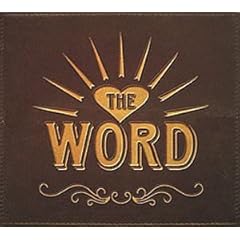
I love slide guitar in all its forms: bottleneck, pedal steel, lap steel, dobro, etc. I'm slightly embarrassed to admit that it took me the longest time as a kid to figure out how players were making those sounds come out of a guitar (in my defense, it was pre-MTV). I was listening again this weekend to a fabulous collaboration album, The Word. Blues artists the North Mississippi All Stars teamed with absolute newcomer (at the time) Robert Randolph on pedal steel and producer / jazz keyboardist John Medeski (of Medeski, Martin, and Wood) for this powerful album of gospel tunes inspired by the "sacred steel" guitar tradition of some black churches. The playing is exuberant and exhilarating. Since this album, Randolph has become established as a commercial artist, releasing some other music I enjoy. But in my opinion, none matches the pure joy of The Word.

Sunday, October 14, 2007

Track Plan Analysis, Part 2

Continuing our track plan analysis discussion, one person asked me why I didn't focus earlier on layout vision and concept. After all, it's the first thing I ask about in the questionnaire I suggest for new clients. And when designing a model railroad track plan, it is the most important issue in my mind, by far.

But in analyzing an existing plan, I don't usually get there until a little later in the process. Bear in mind that it took me a lot longer to write about the first three steps (see earlier post below) than it does to go through them on a particular plan. A lot of this is intuitive for me at this point and I tend to jump around between these steps, not follow them rigorously. OK, back to our discussion.

4) Reality-based rendering

Whether hand-drawn or computer generated, a number of overly-optimistic errors can creep in. Track-to-track spacing, S-curves, impossible grades, unworkably tight turnout angles, and curves not meeting tangents at right angles can all be problems. Tracks too close to the benchwork edge or a wall also crop up quite often. I'm not looking for one small error; this is often systemic with a particular plan.

One thing that I see quite often lately is errors in plans drawn with general CAD programs. Sometimes the turnout angles are correct, but they've been drawn impractically close to the next turnout. In real life, it requires space for the points, so turnouts can't be lined up like sardines in a can.

The commercial press often uses general drawing tools to render the beautiful track plans seen in the magazines. These track plans sometimes contain many of these errors, since they are developed from author inputs of varying precision.

5) Train capacity, flow, and balance

Here I am looking at the overall scheme. In anything but the smaller plans, I'm trying to understand if there are sufficient passing tracks in the best locations to allow the desired traffic to flow. In double-track designs, the location and orientation of crossovers is the key factor. I'm trying to get an idea of what the typical and maximum train length can be, how many trains in motion at once, etc.

Friend and fellow former Layout Design Journal editor Joe Fugate has adapted formulae originally published by Dr. Roy Dohn (Model Railroader, June 1968) for this purpose. [Joe published these in LDJ#21, Fall 1998 and on-line here.] I find this mechanistic approach does not work well for me personally, but it is a way some have found useful to look at capacities and flow.

I prefer to look more qualitatively, considering the typical train length (what has been called a "lineal" by some). Where does a train of typical length fit, where may two trains meet or pass, how far apart are these locations, etc. Again, it took a lot longer to write these paragraphs than I spend on this element when considering a typical plan. But it scuttles more than a few plans whose meet/pass points are too few, too short, or too clustered.

For plans with staging, I am also considering at this step whether the number and length of the staging tracks is in balance with the passing sidings or meet/pass areas between crossovers. A ton of staging may not do much good if only two trains can be operated across the layout at once because of a lack of meet/pass points. Staging tracks much shorter than the typical meet/pass points are also an out-of-balance signal.

6) Leads, runarounds, and switchbacks (Oh, my!)

Yep, another pet peeve. The persistent overuse of switchbacks by model railroad layout designers sometimes makes a plan look busy but operate poorly. A recent published design requires five back-and-forth moves to serve one industry.

More generally, I am looking to see if runaround and lead lengths are consistent with industry track length, rolling stock and motive power length, and if many switching moves require blocking a busy mainline or moving a lot of previously placed cars at unrelated industries.

A surprising number of newbie plans contain no runaround or an unfeasibly short runaround. Or they have an 18" switchback switch lead to serve a 48" long track hosting three large industries.

This is one of the areas where I must fault the commercial press. They publish designs with these failings over and over again … it provides a very bad example for aspiring designers.

===

Whew! A lot of words so far for steps I usually do pretty quickly. But perhaps it will suggest areas to consider when analyzing plans on your own. Next installment: yards, Cornerstones, and PICS.

Index to all five trackplan analysis posts
My wife and I had the good fortune to see Mark Knopfler and Emmylou Harris in concert last summer in support of their All the Roadrunning album. After a fabulous solo vocal by Emmylou, Knopfler remarked to the audience, "There is only one … Emmylou Harris". I absolutely agree. She has been a favorite artist of mine for decades and I believe she is doing some of her best work now. I listened again this week to Red Dirt Girl, an album that showcases an artist still at a high point in her musicianship, but with the wisdom and strength that comes only from the experience of life's lessons learned. Moving, haunting, atmospheric … there is only one … Emmylou Harris.

Sunday, October 07, 2007

Track Plan Analysis, Part 1

"Don't ask me what I think of you, I might not give the answer that you want me to." One of rock's more clever lines, penned by Peter Green in the early days of Fleetwood Mac. This phrase has been echoing in my mind recently after a couple of experiences trying to help newbie layout designers on the Internet.

Regular readers will already know my concerns about the simultaneous proliferation of cheap or free CAD software and weak layout designs on the Internet (some CAD, some pencil and paper). Undaunted, I still occasionally find myself trying to help people with their ideas (yes, I'm a slow learner). So both on-line in the forums and off-line in private emails, I've tried to offer design advice.

The outcomes are almost always disappointing. I think it's often a case of mismatched expectations and experience.

There's one group of folks posting designs who are looking only for adoration of their "baby", not for advice on how to make it better. Good luck getting these savants to incorporate needed changes. Another group possesses very little background on model railroad layout design principles but insists on pressing forward with their own design regardless. These situations can be very frustrating, because there's no common language to use: if the newbie doesn’t know what constitutes a runaround or a switchback, it's darn-near impossible to help them understand what you're trying to point out.

A final group just isn't serious about what they post. After many helpful respondents offer advice, the original poster replies, "Oh well, I'm not moving out of Mom's condo for at least two years anyway, so I'm not really sure what space I'll have." Thanks a bunch, Junior!

I enjoy helping people, but the individual interactions often seem unsatisfying for both parties. So what to do? Perhaps an answer is to spend a little time and effort in a few blog posts describing what I look for in analyzing a plan, in print, on-line, wherever.

I've written indirectly about some of these ideas before, in earlier blog posts about the 8 Tricky Traps of layout design (here, here, and here). But this is looking at things from the other way around: how to analyze a model railroad track plan when considering it for long-term enjoyment, space efficiency, ease of building, maintenance, and operation, etc.

I'll list these ideas in a (very) roughly sequential order, but I don't follow this order rigidly in my analysis. I might skip around if there's a glaringly obvious shortfall or an evident highlight that merits priority focus. I'll present the first three ideas in this posting, with more to come in future blog entries.

1) See the space, not a table

Typically, the very first thing I like to understand when considering a model railroad layout design is the space it will occupy. What's the overall size of the room, how does one enter the space, where are the windows and other obstructions, etc.

Many plans are drawn and presented without any indication of the space which they occupy. And very often, these are drawn as one or a couple simple rectangles. For example: 6'X6'; two sheets of 4'X8' plywood in an "L", a 12'X12' monster with "Prairie Dog Village" pop-up holes, or the "sacred sheet" HO 4X8 (and regular readers know how I feel about those!).

I'm willing to bet that 9 out of 10 times, designing a model railroad layout solely to fit building material manufacturers' preferred sizes of sheet stock is a mistake. It's easy to see that a more-interesting layout will fit in the same sized room as will a 4X8, once one considers the aisles necessary for construction, maintenance, and operation.


It's certainly more challenging to design a layout that makes best use of the available space, but the rewards of greater long-term interest and better access make the extra effort worthwhile.

While considering the space, I also think about aisles, duckunders (if any), and overall reach required. Lots of plans flunk out at this stage, or require substantial rethinking and rework.

2) Thematic schematic

A model railroad schematic is the unwinding of the track plan to show the relationships between the various elements and connections. When I consider the schematic of a plan, I am looking first to see if it is logical and comprehensible (not the same thing!). Next I am thinking about what themes or concepts this schematic can support from an operating and/or model railfanning standpoint.

The image below is John Armstrong's Pennsylvania and Potomac from 101 Track Plans for Model Railroaders.


When we unwind this plan into its schematic, we discover that it's basically a continuous-run with a reversing connection.


With this type of schematic, it's possible to support a decent amount of operation, even in a relatively small space. Layouts with a lot of odd alternative routings and short-cuts can be hard to understand and operate and may not prove interesting in the long run.

I don't always sketch out the schematic when looking at a straightforward track plan, but it's a step I will take when trying to analyze something more complex. Since many designers either don't understand schematics or don't bother to check them, many plans are offered up for discussion (or even published) with inherent routing flaws.

3) To stage or not to stage

Personally, I like staging. I include it in most of my designs because I like the idea of trains leaving the visible layout to go "somewhere else" and for trains to arrive on the visible layout from "somewhere else". This gives me the feeling that the visible modeled scene in front of me connects with, and is influenced by, the larger unmodeled world.

Having said that, I'm not one to insist that every model railroad track plan requires staging, although many more could benefit from staging than are drawn with it. It depends on the owner's desires for the layout. An interest in operations or model railfanning seems to me to suggest staging, while a layout designed instead primarily for display of models might not suffer through lack of staging. (And some model railroaders just can't see the point of placing any track where it's secluded or hidden.)

What I am looking for in this step is to see if the owner's desires are reflected in the plan. Assuming there is staging, I am next looking for accessibility, capacity and the flexibility in the way the staging connects to the fully modeled scenes. Are the staging tracks sufficient in number and length to support the owner's desires and/or rolling stock inventory? Can trains from staging run only one way around the layout with no way to return?

I recently saw an HO layout design posted with a number of staging tracks that appeared to be about 18" to 24" in length. Unless it's an interurban or streetcar layout (and this was not), those clearly aren't long enough to be useful. Yet the design was greeted with the standard "Great, you’ve got staging!" litany of comments from the forum peanut gallery.

Track plans that survive this first round of analysis pass on to the consideration of more subtle, but equally important, elements. More on those later.

Monday, October 01, 2007

You're not an expert if …

One of the things I find just plain silly is the large number of people on Internet forums who believe that they can present themselves as expert modelers by parroting certain stock criticisms or truisms that they feel denote expert status. As a public service, here are seven of these tired bromides … none of which mark you as an expert modeler.

Criticizing Model Railroader magazine does not make you an expert modeler.

No, it’s not perfect for everyone, but MR is the "big tent" that serves most of the hobby pretty well. Yeah, yeah, we get it, you're telling us you're much too advanced for MR magazine. We just don't believe you. Or care.

Unstinting loyalty to Athearn Blue Box does not make you an expert modeler.

Good grief. There are lots of terrific models on the market today. Some of Athearn's products are fine … some, with their warped car weights and meat-grinder drives, are better left as a hoary memory of the past.

Worshipping at the altar of Allen (or Ellison, or Westcott, et al) does not make you an expert modeler.

Being a groupie doesn't impart any special status to your modeling. Especially if it closes your mind to the myriad different approaches and concepts that can inform and improve your modeling and enjoyment of the hobby.

Complaining about prices does not make you an expert modeler.

No, it's not the world's cheapest hobby. But allowing for inflation, model railroading gear is a better buy relative to the past than are homes, gasoline, and automobiles. (Here's a tip: complaining about the price of cars doesn't make you Jeff Gordon, either).

Denigrating newbies and casual hobbyists does not make you an expert modeler.

Still haven’t started your layout because you haven't yet tracked down the names of the porters in all the Pullman cars operating over your stretch of mainline on April 9th, 1955? Your dedication to prototype authenticity is awe-inspiring. But it doesn't impress me to hear you rant about the guy who's actually building and enjoying something, albeit with some anachronisms. In fact, complaining about that guy's lack of modeling rigor just makes you sound like a bitter twit. Yo bro', it's a hobby!

Constantly predicting the death of the hobby does not make you an expert modeler.

These self-appointed Jeremiahs of the Johnson Bar harp incessantly about the impending death of the hobby, brought on by the proliferation of ready-to-run, the horrifying influx of unwashed masses who don't know their John Allen from their John Armstrong, and the fluoridation of public water supplies. Not that these folks ever do anything to bring newcomers into the hobby. Oh no, they've got much too much on their plate defending the hobby from the rabble who just want to build layouts and enjoy the process.

Kvetching about ready-to-run does not make you an expert modeler.

Face it, pilgrim, the hobby has changed. Models today are much more detailed than even 10 to 15 years ago. Way back when, RTR models were just kits that someone had assembled … now they are engineered for efficient production. Not everybody has time and skills to whip up an SP C10 2-8-0 MacGyver-like from two old tin cans and a roll of solder. But they can still build a great layout and that's a fine thing. And if you insist that scratchbuilding everything is the only true way to model railroad, have at it! Let us know how the armature-winding is going …

Of course, the people who need these tips the most won't see themselves in this list. They'll just stay in the group I like to call Doggedly Fretting about Unimportant Stuff (DFUS). In case you're wondering, that acronym is pronounced "Doofus".

Note: This post in no way is meant to criticize people who make the investment in time and effort to improve their skills, scratchbuild, and/or research the prototype. I find their efforts appealing and motivating. I have also found most of the true expert model railroaders I've met to be helpful, inclusive, and embracing of change. Unlike most of the DFUS crowd.

Warren Haynes has long been a favorite. Another member of the extended Allman Brothers family, his brawny vocals and smooth playing are a nice complement. Gigs with the Allman Brothers, The Grateful Dead(!), his own Gov't Mule, and solo make him one of the hardest working guitarists in rock. I enjoyed listening to Gov't Mule's The Deep End (Vol. 1) this weekend, which saw the surviving members of the original band teaming with a legendary roster of guest bass players, vocalists, and guitarists. The results are nicely diverse and it's interesting to hear some legendary players inspiring, and inspired by, Haynes and drummer Matt Abts.

Sunday, September 23, 2007

Lost weekends

I've never been a big partier, so the title is not referring to some dissipative debauchery. Instead, it's describing the handful of weekends I've spent infatuated with a change in direction of what I plan to model. Most of these have been brief divergences driven by some off-hand discovery, article, or idea.

When I moved to the Bay Area in 1997, my plans were to build a proto-freelanced shortline/secondary mainline based on the proposed-but-never-built Midland Pacific. My layout design and operating plans for the Midland Pacific were covered in detail in the Layout Design SIG's Layout Design Journal # 35, December 2006.

Within a few years, I shifted concepts to a prototype-based Bay Area plan focused on San Jose and environs. I worked on this for a couple of years, until one day while on a walk I realized that San Jose was ten pounds of sugar in the five-pound sack that was my garage. The only way I could get all the things I really wanted into a layout was to proto-freelance. This led me to the Oakland Harbor Belt (OHB) layout currently under construction in the garage. I remain happy with this concept and I'm looking forward to it slowly taking shape.

But along the way, I've had ever-so-brief dalliances with other ideas, locales, eras, even scales. There was the one long holiday weekend (while my family was out of town) spent feverishly on the computer wrapping an HOn3 Hawaiian-themed proto-freelance layout into my garage space. Operations would have been somewhat limited with no interchange, but at least my HO-chauvinist friends could have read the car numbers. I decided I liked the OHB better, but I did get the germ of an idea for an article out of it, slated for publication soon in the commercial press. So that weekend wasn't really lost.

Another model RR crush was on the Central California Traction (CCT), an eminently modelable traction line turned diesel shortline. (Fan site here, the RR's official site here) This one was pretty serious, dropped only when I decided the lack of suitable models in N scale for the period in which I wanted to set the layout was going to be too difficult for me to overcome. Friend Dave Stanley has since written a terrific book on the CCT with Jeffrey Moreau. Fortunately, the book had not been published when I went through my brief CCT obsession, or who knows where I would have ended up! Once again, the focus was not wasted, because later I had the chance to do a custom proto-freelanced HO design for a client based loosely on the CCT and the neighboring Sacramento Northern.

One other weekend fling was with the Modesto and Empire Traction. This is a very neat little shortline that does some pretty big-time railroading in a few miles of industrial park in central California. In the end, my interest in rail-marine brought me back home to the OHB, but the idea of shoehorning some tight HO curves into the garage for a couple of Bachmann 70-tonners was good for some heated doodling. Eventually cooler heads (and some radius reality!) prevailed.

This last affair came to mind this month with the article by friend Trevor Marshall in the October 2007 Railroad Model Craftsman. Trevor does a great job outlining the present-day M&ET and offering a neat Free-Mo based layout design concept. It's a two-part article, so I am really looking forward to next month's issue. This is a very modelgenic prototype, especially for contemporary or near-contemporary layouts. No tangible results yet from my M&ET infatuation, but there is that long, empty wall in my office … and there are still some 70-Tonners around ….

Each of these brief flirtations has ultimately strengthened my focus on the OHB. The explorations of different eras, themes, even scales helps bring to light the reasons I made the choices and trade-offs that led to this concept. Hopefully these lost weekends will be fewer in number (and less intense in severity) as construction continues, but I'm glad for the perspective they brought along the way.

This weekend's guilty listening pleasure was Un-Led-Ed by Dread Zeppelin. Yes, a reggae band fronted by an Elvis impersonator doing Led Zeppelin covers. I can't explain why I enjoy listening to it … and I have even less justification for why I bought the CD in the first place. It was LA, I was young .... (alright, younger) This is definitely a once-per-decade listen -- but I liked it! (Talk about a lost weekend …)

Wednesday, September 19, 2007

Too common to name

Thanks to the Discovery Channel, most of us know the word describing animals that are active at night and rest in the daytime (like most bats, for example) -- it's "nocturnal". But is the word for being active in the day and resting at night on the tip of your tongue? It's "diurnal". Because I was a biologist once (a long, long time ago), it's a word I know well. But for most people, it's not a regular part of their vocabulary.

Why is that? It would seem that the word (diurnal) that describes our own mode of life would be more common to us than a word (nocturnal) that describes a foreign mode of life. The reason it's not, I submit, is that some things are almost too common to notice, remark upon, or even name. But those common things make up most of our life experience. The exceptions are memorable, but the common occurrences, sights, and experiences make up our definition of normal life.

"So how does this relate to layout design, operations … or really, to anything I care about, Byron?" you may ask. Simple. When we build a layout or design an ops session, I think it's easy to become focused-in on something unusual, something unique. Some amount of that defines the character of a prototype or a place, to be sure. But too much emphasis on the exceptional can give our layouts or op sessions an air of unreality.

This came to mind recently looking at Jim Boyd's photo of an Illinois Central E6 passing through Rockford, Ill. in June 1965 in the October 2007 issue of Railroad Model Craftsman (page 47). The subject of his photo is obvious, the relatively unusual (by that time) E6 on the point of the Land O' Corn. But there are a myriad of details in the rest of the photo that scream -- OK, whisper -- "reality". The longer I looked at the photo, the more these became obvious: signs hanging from storefronts; some windows open, some closed; access ladders; power poles; etc. While the rare E6 is interesting, the humdrum details make the photo look real.

If we were asked what we noticed about the photo, most of us would be hard-pressed to name a lot of these everyday elements -- they are so common we filter them out. But they are worth the extra effort to think about and include in a design or ops session. Layout Design SIG founder Doug Gurin and others speak of "modeling typicality", and that's excellent advice. And of course, it's possible to overdo these details into a cluttered mess that overpowers the viewer. The typical is not always easy to appreciate, or easy to capture, but its ubiquity makes it an important consideration.

An "eye for the usual" sounds like a contradiction in terms, but it's modeling the things that are "too common to model" that gives a scene life.

Friday, September 07, 2007

Preview of coming attractions

Friend Bart Thurber has already contributed substantially to my Oakland Harbor Belt layout. He's researched the locale and railroads that served it during many dusty hours in the Oakland Library's archives, joined me for study jaunts to see what's left of the prototype railroads in the area, and been a strong supporter of the concept.

But now he's really gone above and beyond … building his own version of a key element of the OHB. Alice Street Yard was the Santa Fe's outpost on Oakland's inner harbor, a pocket yard served only by car float from Richmond. (For more on Alice Street, refer to W.W. Childer's fine article in The Santa Fe Railway Historical & Modeling Society's Warbonnet, Third Quarter 2001.)

Bart's done a great job of squeezing an HO representation of Alice Street into a spare-bedroom-sized space. He was kind enough to invite me over to operate (or was it that I was there and invited myself to operate …). The layout is still in its early phases and Bart has yet to apply any of his fine modeling skills to the structures. Most of the industries are still mock-ups, but I had a very enjoyable time working the yard, team tracks, freight house and associated industries in response to the arrival of a couple of car floats (actually cars Bart interchanged by hand from storage drawers beneath the benchwork).

For a nearly-new layout, things ran well and we had only a couple of very minor hiccups. It was terrific fun actually operating for a change while Bart busied himself with the "hands-on" interchange and working the nearby SP tracks with another throttle. He's taken the time to add a coat of earth-colored paint and sprinkle a bit of ground cover. That, along with the industry mock-ups, was more than enough to put me in a fun railroadin' frame of mind.

Even better, I was essentially "test driving" a section of my own layout years before I will get to that phase of construction. During my planning, I've wondered if switching on my own depiction of the Alice Street Yard would be varied enough to hold an operator's interest. After this preview of coming attractions, I think it's going to be great. But, Bart, I might need to do some additional research … umm … maybe I'd better come by and operate some more …

Gavin DeGraw's 2003 album Chariot is a well-produced pop package. That description might put some people off, but I have enjoyed listening to it lately. Crisp but unpretentious guitar work by Michael Ward (Ben Harper, Shelby Lynne, Wallflowers) sets off DeGraw's vocals and keyboards while adding just a touch of Keith Richards-style bluesy greasiness to "Chemical Party" and a driving southern rock feel to "I Don't Want to Be". DeGraw's voice flows easily from a slightly gritty Black Crowes-esque vibe on the latter to a soulful strut on "(Nice to Meet You) Anyway". Yeah, the teens swooned for the "Chariot" video and know DeGraw from One Tree Hill, but I don't hold that against him.