Before I started designing layouts for others, I thought the process of layout design was inevitably fraught with roadblocks. But in the last few years, I've noticed that designing layouts for others is sometimes challenging, but there's always a way forward. I'm much more likely to be stymied working on my own design, however.
I think this is because there is always a process of concession and compromise in layout design. When working with someone else's "givens and 'druthers", it's relatively easy to prioritize between conflicting elements. But deciding which of my own precious desires to toss overboard is still challenging. And sometimes I make a decision on my own design that nags at me.
One of these was my plan for ATSF's Alice Street Yard*. This "pocket" prototype served a clutch of customers along Oakland's Inner Harbor with tracks that were otherwise unconnected to the Santa Fe except via a car float from Richmond. The Alice Street trackage, quite compact in real life, was spread out over an area about half-again the scale size of the real thing in twisting and turning things around in the garage. Holy selective expansion, Batman!
And it has bugged me.
So it's back to the drawing board for Alice Street. I'm not sure exactly where it's going to end up, maybe as a "Sklylobe"† over the car, but I feel more comfortable now that I will be exploring the essential cramped nature of the prototype.
Thanks for visiting, see my latest posts here
*Alice Street was covered extensively in W. W. Childers' article in the Third Quarter 2001 issue of The Warbonnet, the Santa Fe Railway Historical and Modeling Society's excellent magazine.
†I wrote about the Skylobe concept in the LD SIG's Layout Design Journal, issues #28 and #35.
Sunday, June 24, 2007
Wednesday, June 20, 2007
The (slightly) intentional railfan
A few months ago I wrote about my "accidental railfan" trip along the joint UP/BNSF Tehachapi crossing. As you may recall, I was not well prepared: no camera; less-than-interested car mates; etc.
Well, I had the chance to travel through the area again and especially since I am working on a design that features the area, I thought I would be a little more serious this time. OK, but not too serious. It seems the family needed the digital while I was gone, so I bravely set out with an old film snapshot camera. First stop on the way down to So Cal: Caliente, a key element on the layout project.
After getting my bearings, a quick look around and I spy a decent spot to get a bird's-eye view. Climb up the hill and I hear flanges squealing. Real railfans go out all day and never see a thing; I bumble onto a train in the first five minutes. Oh yeah, and the camera's down in the car. Nuts! It was great though, you shoulda seen it.
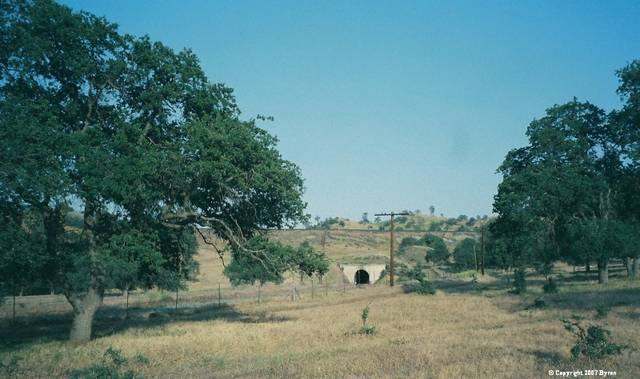
 Anyway, I realize this mixed BNSF manifest is on its way toward the Loop … and as it happens, so am I! Back in the car, return to the Freeway and jump off again at Keene, wind along down to Tunnel 9 on the famous Loop. This time I take the camera with me. The sun is on its way down, so there won't be a long wait one way or the other -- either a train will arrive or it will be dark. But soon enough I hear airhorns in the distance.
 In the late afternoon light the same train I saw in Caliente is curving around the entrance to Tunnel #9 and the Loop. Quick photo or two and a friendly (I hope) horn blast from the engineer startles me as BNSF Techno-Toaster 4868 wheels its train of reefers, tankcars and coal or coke hoppers around the Loop. Oh, yeah, and I took the requisite crossover shot. OK, I'm still not sure I'm cut out to be a modern day railfan, but that was pretty neat.
 On the return leg to the bay area, I decide to be a little more organized about this. With a photo or two at the Loop already in the camera, I want to focus on some other areas. Couple of quick photos in Mojave to capture some neat things that might not be there for long (like the sign at White's Motel) and I see a BNSF train headed out of town toward Tehachapi. It's not often that I have seen a loco defaced with graffiti, but this GP-35 has received a vandal's unwanted attention.
On up over Tehachapi on a beautiful spring Sunday (mid-May). Returning to Caliente, I drive around for a few establishing shots that I need for the track plan. I was surprised to see a few cars parked at the (closed on Sunday) Post Office and a couple of guys standing around talking. Locals, I guess -- maybe this passes for an outing in Caliente on a Sunday afternoon.
Then I head just outside of town to my vantage point from a few days before. OK, this is a pleasant afternoon eating a sandwich the Moms packed in the shade of an old oak, but this railfanning outing seems to be more like a solitary picnic sans train. (Yes, I'm a wimp -- I did say I was only a slightly intentional railfan.)
 But then, airhorns. A BNSF TOFC (Trailer on Flatcar) train is working its way into Caliente. I catch it across the valley as it pulls in from the site of the former Tunnel #1/2. Soon the full train is laid out around the curve as BNSF 4597 rolls by my sidehill perch.
 Just after the train pulls out of town, I start to do the same. Roaring past me at the intersection are the three cars that were parked at the Post Office. Railfans! (The intentional variety, no doubt.) From the layout design project, I know the BSNF train is headed to Bealeville, which I'll cross on the road out of Caliente.
 The more serious railfans are long out of sight as I wind up the hill to Bealeville. When I arrive, they are nowhere to be found, until I look up on the nearby hills where they have perched, tripods at the ready. Within minutes, the TOFC train we saw in Caliente has arrived, stopped, and dimmed its headlight. And in the other direction comes the same mixed consist I had seen earlier departing Mojave. This quick photo of the resulting Bealeville meet was the last on that roll of film, so my railfan excursion had come to an end. (My more serious railfanning comrades raced off to parts unknown to bag their next ream of images.)
All in all, a lot of luck, some very pleasant time spent in pretty country, useful research for my client's project, and a few photos to remember it all by. Not bad for a somewhat-less-accidental railfan …
Thanks for visiting, click here to see the latest posts
 Currently listening to Appalachia Waltz by Yo-Yo Ma, Edgar Meyer, and Mark O'Conner. This instrumental music has a timeless, evocative, instantly nostalgic feel that really needs no description except to say that it is truly beautiful.
Well, I had the chance to travel through the area again and especially since I am working on a design that features the area, I thought I would be a little more serious this time. OK, but not too serious. It seems the family needed the digital while I was gone, so I bravely set out with an old film snapshot camera. First stop on the way down to So Cal: Caliente, a key element on the layout project.
After getting my bearings, a quick look around and I spy a decent spot to get a bird's-eye view. Climb up the hill and I hear flanges squealing. Real railfans go out all day and never see a thing; I bumble onto a train in the first five minutes. Oh yeah, and the camera's down in the car. Nuts! It was great though, you shoulda seen it.
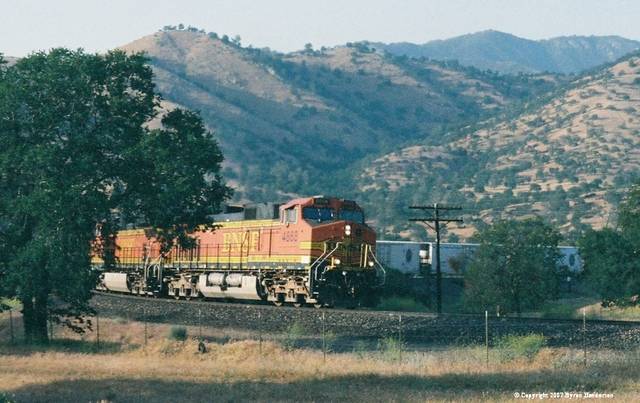 Anyway, I realize this mixed BNSF manifest is on its way toward the Loop … and as it happens, so am I! Back in the car, return to the Freeway and jump off again at Keene, wind along down to Tunnel 9 on the famous Loop. This time I take the camera with me. The sun is on its way down, so there won't be a long wait one way or the other -- either a train will arrive or it will be dark. But soon enough I hear airhorns in the distance.
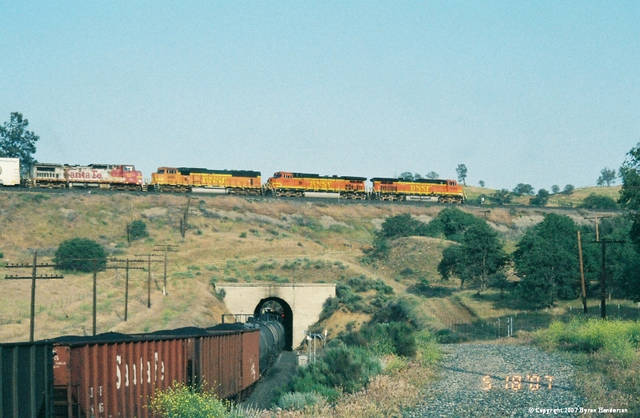 In the late afternoon light the same train I saw in Caliente is curving around the entrance to Tunnel #9 and the Loop. Quick photo or two and a friendly (I hope) horn blast from the engineer startles me as BNSF Techno-Toaster 4868 wheels its train of reefers, tankcars and coal or coke hoppers around the Loop. Oh, yeah, and I took the requisite crossover shot. OK, I'm still not sure I'm cut out to be a modern day railfan, but that was pretty neat.
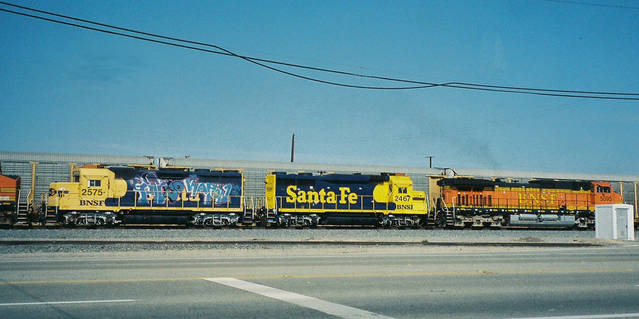 On the return leg to the bay area, I decide to be a little more organized about this. With a photo or two at the Loop already in the camera, I want to focus on some other areas. Couple of quick photos in Mojave to capture some neat things that might not be there for long (like the sign at White's Motel) and I see a BNSF train headed out of town toward Tehachapi. It's not often that I have seen a loco defaced with graffiti, but this GP-35 has received a vandal's unwanted attention.
On up over Tehachapi on a beautiful spring Sunday (mid-May). Returning to Caliente, I drive around for a few establishing shots that I need for the track plan. I was surprised to see a few cars parked at the (closed on Sunday) Post Office and a couple of guys standing around talking. Locals, I guess -- maybe this passes for an outing in Caliente on a Sunday afternoon.
Then I head just outside of town to my vantage point from a few days before. OK, this is a pleasant afternoon eating a sandwich the Moms packed in the shade of an old oak, but this railfanning outing seems to be more like a solitary picnic sans train. (Yes, I'm a wimp -- I did say I was only a slightly intentional railfan.)
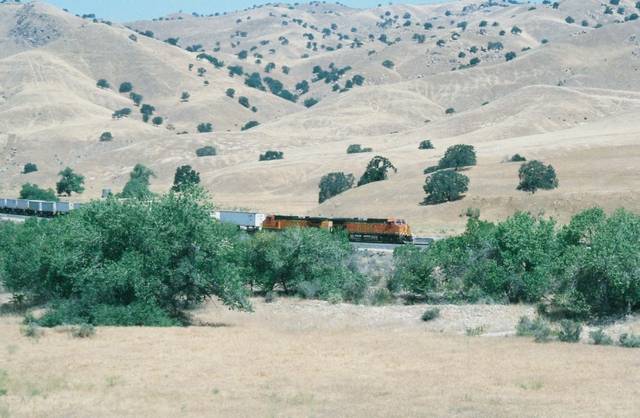 But then, airhorns. A BNSF TOFC (Trailer on Flatcar) train is working its way into Caliente. I catch it across the valley as it pulls in from the site of the former Tunnel #1/2. Soon the full train is laid out around the curve as BNSF 4597 rolls by my sidehill perch.
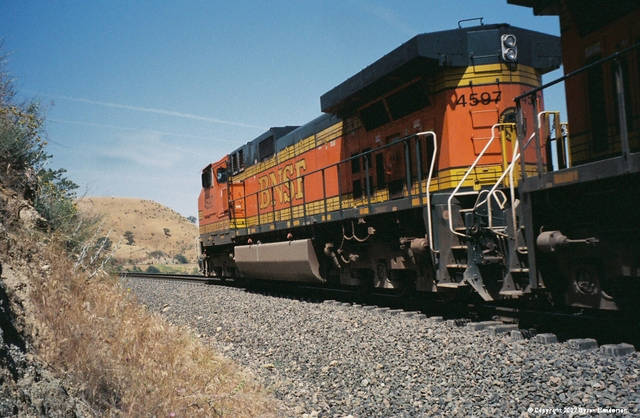 Just after the train pulls out of town, I start to do the same. Roaring past me at the intersection are the three cars that were parked at the Post Office. Railfans! (The intentional variety, no doubt.) From the layout design project, I know the BSNF train is headed to Bealeville, which I'll cross on the road out of Caliente.
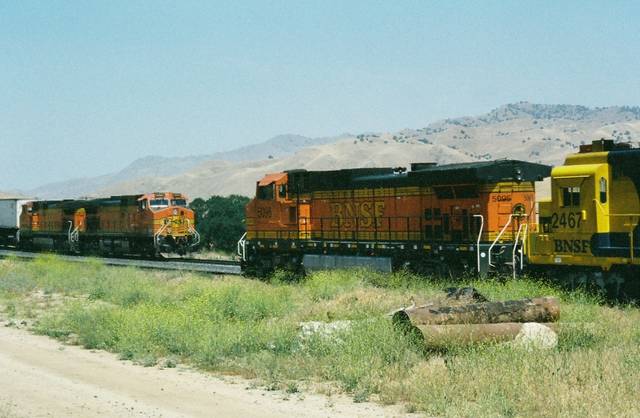 The more serious railfans are long out of sight as I wind up the hill to Bealeville. When I arrive, they are nowhere to be found, until I look up on the nearby hills where they have perched, tripods at the ready. Within minutes, the TOFC train we saw in Caliente has arrived, stopped, and dimmed its headlight. And in the other direction comes the same mixed consist I had seen earlier departing Mojave. This quick photo of the resulting Bealeville meet was the last on that roll of film, so my railfan excursion had come to an end. (My more serious railfanning comrades raced off to parts unknown to bag their next ream of images.)
All in all, a lot of luck, some very pleasant time spent in pretty country, useful research for my client's project, and a few photos to remember it all by. Not bad for a somewhat-less-accidental railfan …
Thanks for visiting, click here to see the latest posts
 Currently listening to Appalachia Waltz by Yo-Yo Ma, Edgar Meyer, and Mark O'Conner. This instrumental music has a timeless, evocative, instantly nostalgic feel that really needs no description except to say that it is truly beautiful.


Saturday, June 16, 2007
Model motivation
Sometimes a particular model will give me a little boost and motivate me to work on the layout. One of these is a cool little SW-1 model built for me by "Crittermeister" Randy Gustafson, whose neat compact Hickory Valley RR was featured in the July 1995 Model Railroader. Randy has built all manner of small locos in N scale, fearlessly scrathbuilding and kitbashing shells and mechanisms.
 This SW-1 is made from a shell casting pulled from Randy's custom mold and a modified Kato NW-2 drive. Custom brass handrails complete the switcher, which wears a "darned close" livery made up of decals pieced together from a couple of commercial sets. (All photos by Randy).
This little gem will be borrowed/leased power for the Howard Terminal segment of the layout, a separate section built as a flip-up portable island. The Howard Terminal will provide DC on the rails, so there's no decoder in the SW-1 -- we used the space for more weight. Looks great, runs great, makes me want to get more done on the layout. So why am I blogging … hmmm.
 Randy posts quite often in the Atlas N scale forum, so I decided to drop in and comment on the thread where he described the process of creating the SW-1. Since I was in a forum anyway, I decided to look around the web and see if things have changed on the forum scene during my self-imposed exile.
Yeesh … that was a mistake. Not much has changed, least of all my tolerance for jerks and blowhards. Guess I'm not quite ready to venture back onto the forums.
Forum foolishness aside, the Internet is an amazing medium for connecting us to small companies and individuals (like Randy) that can provide modeling possibilities beyond our own personal skills. Even though it's only running on my interim switching layout now, Randy's SW-1 is a unique model that's giving me a good shot of inspiration.
 This SW-1 is made from a shell casting pulled from Randy's custom mold and a modified Kato NW-2 drive. Custom brass handrails complete the switcher, which wears a "darned close" livery made up of decals pieced together from a couple of commercial sets. (All photos by Randy).
This little gem will be borrowed/leased power for the Howard Terminal segment of the layout, a separate section built as a flip-up portable island. The Howard Terminal will provide DC on the rails, so there's no decoder in the SW-1 -- we used the space for more weight. Looks great, runs great, makes me want to get more done on the layout. So why am I blogging … hmmm.
 Randy posts quite often in the Atlas N scale forum, so I decided to drop in and comment on the thread where he described the process of creating the SW-1. Since I was in a forum anyway, I decided to look around the web and see if things have changed on the forum scene during my self-imposed exile.
Yeesh … that was a mistake. Not much has changed, least of all my tolerance for jerks and blowhards. Guess I'm not quite ready to venture back onto the forums.
Forum foolishness aside, the Internet is an amazing medium for connecting us to small companies and individuals (like Randy) that can provide modeling possibilities beyond our own personal skills. Even though it's only running on my interim switching layout now, Randy's SW-1 is a unique model that's giving me a good shot of inspiration.
Monday, June 11, 2007
Big Little News, Little Big News
There are certainly more products available than ever in model railroading. This is true in all scales (OK, except maybe TT), but I pay the most attention to N scale announcements. I found it interesting that two recent announcements were at more-or-less opposite ends of the scale. Kato's NW-2 and Athearn's Challenger.
Beginning with the latter, what is it with Challengers and Big Boys? What are there, four Big Boys in production in HO now? Athearn's N scale Challenger has been reasonably well-reviewed and comes with on-board sound. Of course, most N scale layouts lack the 16" or larger radii required for this monster to really look good ... and it's out of place on all but a few layouts set in relatively narrow eras (UP, D&RGW, Clinchfield). Obviously, a big engine is interesting as a novelty, to a collector, or to someone who operates an eclectic motive power fleet.
 Currently listening to The Derek Trucks Band's Joyful Noise. What a pedigree this guy has. Joined the Allman Brothers in his 20s, recently toured with Eric Clapton, married to blues artist Susan Tedeschi. This album is jazz, rock, blues, fusion, afro/cuban ... a little of everything with a southern rock thing bubbling to the top every so often. Great listening for something different.
Beginning with the latter, what is it with Challengers and Big Boys? What are there, four Big Boys in production in HO now? Athearn's N scale Challenger has been reasonably well-reviewed and comes with on-board sound. Of course, most N scale layouts lack the 16" or larger radii required for this monster to really look good ... and it's out of place on all but a few layouts set in relatively narrow eras (UP, D&RGW, Clinchfield). Obviously, a big engine is interesting as a novelty, to a collector, or to someone who operates an eclectic motive power fleet.
On the other hand, the prototype for Kato's NW-2 sold over 1,100 copies, probably ten times the number of units and at least that many more prototype RRs than the Challenger. These operated for decades, sometimes as used units with a wide variety of later owners. The NW-2 could be found on terminal operations and on Class 1s. The model is only available in three or four liveries so far, but more will likely be added. The little switcher runs great, truly amazing for its size, and operates on 9 3/4" radius curves, making it suitable for the vast majority of N scale layouts.
So which do you think got more play in the model press? And which do you think I believe is more useful to most of us? The answers are in the title of this blog entry.
 Currently listening to The Derek Trucks Band's Joyful Noise. What a pedigree this guy has. Joined the Allman Brothers in his 20s, recently toured with Eric Clapton, married to blues artist Susan Tedeschi. This album is jazz, rock, blues, fusion, afro/cuban ... a little of everything with a southern rock thing bubbling to the top every so often. Great listening for something different.
Friday, April 27, 2007
Sandwich Spread*
Like many of you, my wife and I are part of what's sometimes called the "sandwich" generation: at the same time that we have a child in school, our aging parents are beginning to need more of our time and attention. For the last couple of months, the demands at both ends of this spectrum have been high and our family's been spread a little thin.
At times like this, I start to wonder about the practicality of having a hobby. I have made little or no progress on the layout for weeks and the prospects for the next few weeks seem no better. The NMRA Pacific Coast Region convention is coming up and not only won't I be attending, I'm not even ready to host a few friends who wanted to come by and see my progress on their way to- or from the event -- because there's darn little progress to show.
It's easy (for me, at least) to begin thinking it's foolish to spend time on the hobby when there are so many more pressing needs that demand my attention. Family comes first, of course, and clients can't be expected to wait forever for their projects. And then there's the news of the day that screams for attention and action. Maybe the idea of a hobby is just not compatible with today's world and my current time-of-life.
… so after wallowing in those happy thoughts for a few minutes, I had the good sense to take a step back and look at things in perspective. Play and recreation has been a part of human society for thousands of years. Early humans made art and played games of various sorts. Sociologists have documented puzzle and gambling games played by adults in Native American groups and remote tribes untouched by modern culture, as well as myriad paintings, carvings, sculpture, and other art. Surely these peoples had plenty to worry about just staying alive (food, shelter, avoiding hostile clans and critters, et al), yet they made time for recreation.
In more modern settings, Stephen Covey's 7 Habits of Highly Successful People stresses the need for renewal through, among other things, activities to boost mental creativity and social interaction. Winston Churchill was an enthusiastic painter in oils throughout his life, even during periods of immense time pressure and stress. Model railroading can certainly offer the same kind of creative outlet.
Nope, I don't have a lot of time right now, and there are many other demands on that time. But maybe carving out a little of that time for some creative renewal in actually modeling would be a good investment.
* Yes, there is such a thing as sandwich spread, a mayonnaise-and-relish concoction that's a bit like slightly sweet tartar sauce. It was a favorite condiment of my late Father, who used it on everything from bologna sandwiches to leftovers.
At times like this, I start to wonder about the practicality of having a hobby. I have made little or no progress on the layout for weeks and the prospects for the next few weeks seem no better. The NMRA Pacific Coast Region convention is coming up and not only won't I be attending, I'm not even ready to host a few friends who wanted to come by and see my progress on their way to- or from the event -- because there's darn little progress to show.
It's easy (for me, at least) to begin thinking it's foolish to spend time on the hobby when there are so many more pressing needs that demand my attention. Family comes first, of course, and clients can't be expected to wait forever for their projects. And then there's the news of the day that screams for attention and action. Maybe the idea of a hobby is just not compatible with today's world and my current time-of-life.
… so after wallowing in those happy thoughts for a few minutes, I had the good sense to take a step back and look at things in perspective. Play and recreation has been a part of human society for thousands of years. Early humans made art and played games of various sorts. Sociologists have documented puzzle and gambling games played by adults in Native American groups and remote tribes untouched by modern culture, as well as myriad paintings, carvings, sculpture, and other art. Surely these peoples had plenty to worry about just staying alive (food, shelter, avoiding hostile clans and critters, et al), yet they made time for recreation.
In more modern settings, Stephen Covey's 7 Habits of Highly Successful People stresses the need for renewal through, among other things, activities to boost mental creativity and social interaction. Winston Churchill was an enthusiastic painter in oils throughout his life, even during periods of immense time pressure and stress. Model railroading can certainly offer the same kind of creative outlet.
Nope, I don't have a lot of time right now, and there are many other demands on that time. But maybe carving out a little of that time for some creative renewal in actually modeling would be a good investment.
* Yes, there is such a thing as sandwich spread, a mayonnaise-and-relish concoction that's a bit like slightly sweet tartar sauce. It was a favorite condiment of my late Father, who used it on everything from bologna sandwiches to leftovers.
Monday, February 26, 2007
A funny thing happened on the way to the forum …
… I didn't go. And haven't been back. And haven't really missed it.
Hello, my name is Byron and I've avoided online model railroad forums for over three weeks.
Oh, it started innocently enough. A brief pop-in on a Sunday evening to see if there were any folks needing help on the LD SIG list. A quick check on the eternal "the hobby is dying, it hit me on the head!" discussions over at MR. A short read of the "never operated but I've got all the answers" thread on the OpSIG forum. But then the visits came more often.
Finally, there I was, tired and cranky on Groundhog Day reading the same inane comments by the same handful of self-appointed experts. And becoming more frustrated by the minute. And then I remembered the Bill Murray movie featuring the same date -- you know, the one where he repeats the same day over and over? I suddenly realized that it was describing my personal on-line forum experience.
Turns out there's only so much pompous posturing, ceaseless self-promotion, and arrogant arguing that I can take. Let's face it, if someone is posting thousands (or tens of thousands!) of times each year on various forums, maybe their hobby is really on-line forums, not model railroading. They're enjoying their hobby, apparently -- but it wasn't helping me enjoy mine.
Of course, it's not just model railroad forums. On-line forums and lists in many hobbies and vocations are filled with the same pointless debates, tired bon mots, and displays of self-importance. In fact, it almost seems that it’s the same people, just with different IDs and different themes.
One of the reasons I got in the habit of visiting on-line forums was that I didn't have better ways to spend small chunks of time. Five minutes here, fifteen there. No time to start a big project, obviously. But with a little advance planning, there is a lot that can be done. With reference materials for my design jobs organized in plastic boxes on new shelving in the office, I can grab one and sketch out a new staging design in CAD while waiting for a conference call to begin. With a couple of extra files in a tray with some track components, I can quickly sit down and prep some turnouts for the layout. The planning and organizing is taking time, but being able to spend those "found" minutes doing something productive instead of raising my blood pressure reading drivel has been great. (But never fear, I have time for writing drivel ... so there will be more blog entries.)
There are probably many of you who get much benefit from time spent in on-line forums. But for me it just became wasted repetitious time spent away from family, fun, client projects, and my own layout. Perhaps one day I can return and use on-line forums in moderation, with enough good humor to just chuckle at the goofballs. But I'm not yet that far along in my recovery. One day at a time.

Hello, my name is Byron and I've avoided online model railroad forums for over three weeks.
Oh, it started innocently enough. A brief pop-in on a Sunday evening to see if there were any folks needing help on the LD SIG list. A quick check on the eternal "the hobby is dying, it hit me on the head!" discussions over at MR. A short read of the "never operated but I've got all the answers" thread on the OpSIG forum. But then the visits came more often.
Finally, there I was, tired and cranky on Groundhog Day reading the same inane comments by the same handful of self-appointed experts. And becoming more frustrated by the minute. And then I remembered the Bill Murray movie featuring the same date -- you know, the one where he repeats the same day over and over? I suddenly realized that it was describing my personal on-line forum experience.
Turns out there's only so much pompous posturing, ceaseless self-promotion, and arrogant arguing that I can take. Let's face it, if someone is posting thousands (or tens of thousands!) of times each year on various forums, maybe their hobby is really on-line forums, not model railroading. They're enjoying their hobby, apparently -- but it wasn't helping me enjoy mine.
Of course, it's not just model railroad forums. On-line forums and lists in many hobbies and vocations are filled with the same pointless debates, tired bon mots, and displays of self-importance. In fact, it almost seems that it’s the same people, just with different IDs and different themes.
One of the reasons I got in the habit of visiting on-line forums was that I didn't have better ways to spend small chunks of time. Five minutes here, fifteen there. No time to start a big project, obviously. But with a little advance planning, there is a lot that can be done. With reference materials for my design jobs organized in plastic boxes on new shelving in the office, I can grab one and sketch out a new staging design in CAD while waiting for a conference call to begin. With a couple of extra files in a tray with some track components, I can quickly sit down and prep some turnouts for the layout. The planning and organizing is taking time, but being able to spend those "found" minutes doing something productive instead of raising my blood pressure reading drivel has been great. (But never fear, I have time for writing drivel ... so there will be more blog entries.)
There are probably many of you who get much benefit from time spent in on-line forums. But for me it just became wasted repetitious time spent away from family, fun, client projects, and my own layout. Perhaps one day I can return and use on-line forums in moderation, with enough good humor to just chuckle at the goofballs. But I'm not yet that far along in my recovery. One day at a time.

Currently listening to: Casualties of Retail by Enter the Haggis, a Celtic-Roots-Metal- … well, actually I don't know what you'd call it, but it's sure fun. Bagpipes and power chords -- cool!
Friday, December 29, 2006
We have liftoff
 Yeah, it’s just a simple wall outlet. Two sets of plugs, one controlled by a wall switch and one always on. High on the wall above these, another switched circuit for layout lights.
But it's what's missing that's important … a clunky surface mount box and a load of previous-owner-installed conduit that was at the exact location I needed for the Oakland Harbor Belt's main staging yard.
For a number of reasons, this has taken weeks, even months, to be completed. But now that the job is done, the last external constraint to continuing layout construction is removed.
There's still a lot of day job work on the schedule, two huge layout design projects to complete, and a bunch of smaller design projects in the backlog, so there won't be a lot of time in the next couple of months. But I'm excited … time to get moving!
 Currently listening to Soundgarden's A Sides. When you're contemplating a big construction project, you need big metal!
Wednesday, December 27, 2006
Notes from an accidental railfan
I hope everyone is having a pleasant holiday season. While returning from our Christmas visit to the ancestral homeland in Southern California, I had the chance to do a little accidental railfanning.
I grew up in Palmdale, less than a half mile from the SP (now UP) line from L.A. over Tehachapi *. As a kid, I often listened in the night to the passing trains blowing their horns for the crossings of Sierra Highway and Avenue P (yep, just a letter). During the summer we'd ride bikes into town and sometimes wait at the Sierra Highway crossing for a train to pass.
Then, as now, I wasn't much of a railfan. I do enjoy seeing real trains in their natural environment, but I generally have spent my hobby time in other ways. So much of what I like about railroading has passed out of existence that railfanning today's rail scenes doesn't generally hold a lot of interest.
But I thought it might be neat to travel home from Palmdale to the Bay Area along a different route than our usual path up Interstate 5. And what better path to take than to follow the passing trains to Tehachapi? (Sorry, no pictures, just words -- remember, I'm an accidental railfan. But here are some others on the web.)
We started out on Highway 14, which quickly leads to Mojave. Now made more famous by Pelle Søeborg's articles in the model press, Mojave is a bit grittier and larger than suggested by his well-done layout. Most of the neat railroad buildings of my youth are gone, but the small yard was full of UP and BNSF trains, including some Norfolk Southern run-through power in a BNSF consist. The yard may have been more crowded than usual since we were traveling the day after Christmas.
Turning onto Highway 58, we were treated to our first train, running Westbound (roughly compass Northwest) through the sweeping curve near Warren. Double stacks and trailers-on-flatcars, with a four engine head-end consist including three different variations of the disappointing (in my view) orange and green BNSF livery and one glorious Santa Fe super fleet unit still in silver-and-red warbonnet. (Nope, still no photos)
The big cement plant at Monolith (others' photos here and here) provided the opportunity for me to share details of its history and function with my wife and daughter, whose complete silence indicated their rapt attention. Or not.
Through Tehachapi, we passed another BNSF train of stacks and pigs, again Westbound. Near the fabled loop at Walong, a very long UP train auto carrier train came into view, including some of the giant "Auto Max" cars I had not seen before in real life. Armour Yellow everywhere, no heritage power on this high-priority movement. And yet another Westbound UP container train just beyond the loop. A great show on a beautiful clear day. Since I am working on a design project right now that includes the loop, it was fun to have a reminder of how spectacular the area is in real life.
Eastbounds were in the hole all along the way -- obviously the Dispatcher was fleeting the Westbounds to get things moving on this day after the holiday.
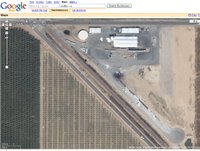 A quick stop for lunch in Bakersfield (geez, those Happy Meals are sure an effective marketing gimmick!), then over the (compass) west end of the former ATSF yard. As we were working our way across the San Joaquin Valley on 7th Standard Road, we encountered the neat small industry (shown at left in a view from Google Maps) along the former ATSF line south of Shafter. This is a place called "Crome" by the Santa Fe, and "Hights Corner" on other maps.
I don't happen to have the Santa Fe CLIC Book for this area and my auto mates didn't seem so keen on a stop, so I'm not sure what industry is located here now, but there was still rail activity. Definitely a modelgenic size and the angled intersection of the streets and rail lines made for an interesting configuration. There also seems to be a bulk unloading facility running along the aptly-named "Santa Fe Way" road slanting from top-left to bottom-right in the view.
Our travels then took us briefly on Interstate 5 until we could leave the hordes behind for a scenic jaunt through Coalinga (no search there for remnants of the SP, though) and on to the west on Highway 198. Just before joining Highway 101, I took a side trip through the burg of San Lucas on the former SP Coast Line. A large concrete elevator had attracted my eye in the past, but the industry seems now dormant. One forlorn and rusty covered hopper was spotted at another industry in town, so perhaps there is still some rail activity here.
Night and the rain began falling at about the same time, so that put an end to even my (very) casual railfanning. With relatives and friends in So Cal, I've traveled from north to south and back again many times in the past. I've sometimes focused on areas along the way that represented specific modeling interests, like the SP/ATSF Sunset Railway and the route of my proto-freelanced Midland Pacific. But my experience this week suggests that maybe I should have a slightly more open mind on my next trip …. and get out the camera! That is, for any trip I make without my family of reluctant railfans.
*For more on railroads in the Antelope Valley, I recommend Phil Serpico's book Railroading through the Antelope Valley. John Signor's fabulous Tehachapi book, along with Serpico's, gave me a real appreciation for what was passing by through those years of my youth.
I grew up in Palmdale, less than a half mile from the SP (now UP) line from L.A. over Tehachapi *. As a kid, I often listened in the night to the passing trains blowing their horns for the crossings of Sierra Highway and Avenue P (yep, just a letter). During the summer we'd ride bikes into town and sometimes wait at the Sierra Highway crossing for a train to pass.
Then, as now, I wasn't much of a railfan. I do enjoy seeing real trains in their natural environment, but I generally have spent my hobby time in other ways. So much of what I like about railroading has passed out of existence that railfanning today's rail scenes doesn't generally hold a lot of interest.
But I thought it might be neat to travel home from Palmdale to the Bay Area along a different route than our usual path up Interstate 5. And what better path to take than to follow the passing trains to Tehachapi? (Sorry, no pictures, just words -- remember, I'm an accidental railfan. But here are some others on the web.)
We started out on Highway 14, which quickly leads to Mojave. Now made more famous by Pelle Søeborg's articles in the model press, Mojave is a bit grittier and larger than suggested by his well-done layout. Most of the neat railroad buildings of my youth are gone, but the small yard was full of UP and BNSF trains, including some Norfolk Southern run-through power in a BNSF consist. The yard may have been more crowded than usual since we were traveling the day after Christmas.
Turning onto Highway 58, we were treated to our first train, running Westbound (roughly compass Northwest) through the sweeping curve near Warren. Double stacks and trailers-on-flatcars, with a four engine head-end consist including three different variations of the disappointing (in my view) orange and green BNSF livery and one glorious Santa Fe super fleet unit still in silver-and-red warbonnet. (Nope, still no photos)
The big cement plant at Monolith (others' photos here and here) provided the opportunity for me to share details of its history and function with my wife and daughter, whose complete silence indicated their rapt attention. Or not.
Through Tehachapi, we passed another BNSF train of stacks and pigs, again Westbound. Near the fabled loop at Walong, a very long UP train auto carrier train came into view, including some of the giant "Auto Max" cars I had not seen before in real life. Armour Yellow everywhere, no heritage power on this high-priority movement. And yet another Westbound UP container train just beyond the loop. A great show on a beautiful clear day. Since I am working on a design project right now that includes the loop, it was fun to have a reminder of how spectacular the area is in real life.
Eastbounds were in the hole all along the way -- obviously the Dispatcher was fleeting the Westbounds to get things moving on this day after the holiday.
 A quick stop for lunch in Bakersfield (geez, those Happy Meals are sure an effective marketing gimmick!), then over the (compass) west end of the former ATSF yard. As we were working our way across the San Joaquin Valley on 7th Standard Road, we encountered the neat small industry (shown at left in a view from Google Maps) along the former ATSF line south of Shafter. This is a place called "Crome" by the Santa Fe, and "Hights Corner" on other maps.
I don't happen to have the Santa Fe CLIC Book for this area and my auto mates didn't seem so keen on a stop, so I'm not sure what industry is located here now, but there was still rail activity. Definitely a modelgenic size and the angled intersection of the streets and rail lines made for an interesting configuration. There also seems to be a bulk unloading facility running along the aptly-named "Santa Fe Way" road slanting from top-left to bottom-right in the view.
Our travels then took us briefly on Interstate 5 until we could leave the hordes behind for a scenic jaunt through Coalinga (no search there for remnants of the SP, though) and on to the west on Highway 198. Just before joining Highway 101, I took a side trip through the burg of San Lucas on the former SP Coast Line. A large concrete elevator had attracted my eye in the past, but the industry seems now dormant. One forlorn and rusty covered hopper was spotted at another industry in town, so perhaps there is still some rail activity here.
Night and the rain began falling at about the same time, so that put an end to even my (very) casual railfanning. With relatives and friends in So Cal, I've traveled from north to south and back again many times in the past. I've sometimes focused on areas along the way that represented specific modeling interests, like the SP/ATSF Sunset Railway and the route of my proto-freelanced Midland Pacific. But my experience this week suggests that maybe I should have a slightly more open mind on my next trip …. and get out the camera! That is, for any trip I make without my family of reluctant railfans.
*For more on railroads in the Antelope Valley, I recommend Phil Serpico's book Railroading through the Antelope Valley. John Signor's fabulous Tehachapi book, along with Serpico's, gave me a real appreciation for what was passing by through those years of my youth.
Wednesday, December 20, 2006
Sellios gets real
It was interesting to read about the changes George Sellios (of Fine Scale Miniatures fame) is making to his Franklin and South Manchester layout. OK, I'll start with the disclaimer: Sellios is an exquisitely talented modeler and I'll never come close to his skills, not that I feel the need to do so (thankfully, or I'd never have the guts to build anything).
I have read most of the Sellios articles in the commercial press; I even bought his book on the Franklin and South Manchester. But to be honest, I never really enjoyed the pictures; and I sold the book shortly after buying it. I never could identify what it was that bothered me, sort of a hyper-reality that I have found vaguely disquieting.
After reading Mr. Sellios' article in the December, 2006 Model Railroader magazine, I've finally put my finger on what's bugged me. It's certainly not the execution of Sellios' modeling, it's his vision. And not the semi-run-down-cusp-of-the-depression vision that some have criticized. Instead, it's the way the scenes are compressed, almost as if looking through a telephoto lens.
When we look at a real scene, our minds highlight the interesting bits (tracks, a train, a station building), but don’t focus on the relatively non-descript space in between. We sense that the space is there, but it's not remarkable. However, it's that very unconscious sense of the empty space that clues our minds to the realities of the scene.
Artists talk about the idea of negative space. The concept that what is not shown helps to create context and interest in what is shown. The empty space around an object helps create the interest in the painted or sculpted object itself.
Many of the scenes on the Franklin and South Manchester contain all of the elements that one might see in viewing a real scene, but they are compressed, even amplified. They're too close together (at least for me) -- there's not enough "negative space". The clutter of a 500-foot-deep scene in real life is compressed into 80 scale feet of model railroad.
Sellios notes himself in the article that he has un-detailed some areas to make them look more realistic -- removing crowds from station areas and wall-to-wall clutter from loading docks. The new scenes are still a trifle too condensed for my taste, but they are certainly more realistic to my eye.
I guess it all goes to show how individual are our tastes and how unique is each of our visions. That's something I really enjoy about our hobby and look forward to exploring as my own (much more modest) layout building continues.
Thanks for visiting, click here to see the latest posts
 Currently Listening to: Skip, Hop, and Wobble by Jerry Douglas, Russ Barenberg, and Edgar Meyer. Acoustic "newgrass" music (and much more) with a kick. I've become such a fan of Dobro through listening to Jerry Douglas.
I have read most of the Sellios articles in the commercial press; I even bought his book on the Franklin and South Manchester. But to be honest, I never really enjoyed the pictures; and I sold the book shortly after buying it. I never could identify what it was that bothered me, sort of a hyper-reality that I have found vaguely disquieting.
After reading Mr. Sellios' article in the December, 2006 Model Railroader magazine, I've finally put my finger on what's bugged me. It's certainly not the execution of Sellios' modeling, it's his vision. And not the semi-run-down-cusp-of-the-depression vision that some have criticized. Instead, it's the way the scenes are compressed, almost as if looking through a telephoto lens.
When we look at a real scene, our minds highlight the interesting bits (tracks, a train, a station building), but don’t focus on the relatively non-descript space in between. We sense that the space is there, but it's not remarkable. However, it's that very unconscious sense of the empty space that clues our minds to the realities of the scene.
Artists talk about the idea of negative space. The concept that what is not shown helps to create context and interest in what is shown. The empty space around an object helps create the interest in the painted or sculpted object itself.
Many of the scenes on the Franklin and South Manchester contain all of the elements that one might see in viewing a real scene, but they are compressed, even amplified. They're too close together (at least for me) -- there's not enough "negative space". The clutter of a 500-foot-deep scene in real life is compressed into 80 scale feet of model railroad.
Sellios notes himself in the article that he has un-detailed some areas to make them look more realistic -- removing crowds from station areas and wall-to-wall clutter from loading docks. The new scenes are still a trifle too condensed for my taste, but they are certainly more realistic to my eye.
I guess it all goes to show how individual are our tastes and how unique is each of our visions. That's something I really enjoy about our hobby and look forward to exploring as my own (much more modest) layout building continues.
Thanks for visiting, click here to see the latest posts
 Currently Listening to: Skip, Hop, and Wobble by Jerry Douglas, Russ Barenberg, and Edgar Meyer. Acoustic "newgrass" music (and much more) with a kick. I've become such a fan of Dobro through listening to Jerry Douglas.
Friday, December 01, 2006
Another new design in the gallery
I've been so busy with day job and model railroading projects that I have not spent much time on the website. But I did just add a short note on an interesting little design for someone here in the Bay Area. This was one of those rare cases where the benchwork ( a series of narrow shelves tucked in a corner of the room) absolutely had to be laid out first and the N scale layout designed around the benchwork. (And no, I haven't changed my mind -- "benchwork first" is still a Tricky Trap. This is one of those exceptions that proves the rule.)

All the same, the owner was interested in a real location (the Sacramento Northern's Yuba City Yard). No way to fit it all in, but I think we came up with a pretty good plan that's under construction now. You may read all about it here.

All the same, the owner was interested in a real location (the Sacramento Northern's Yuba City Yard). No way to fit it all in, but I think we came up with a pretty good plan that's under construction now. You may read all about it here.
Subscribe to:
Posts (Atom)